

New Zealand Recalls Asbestos-Contaminated Rangoli Products: What Indian Consumers Should Know
Summary
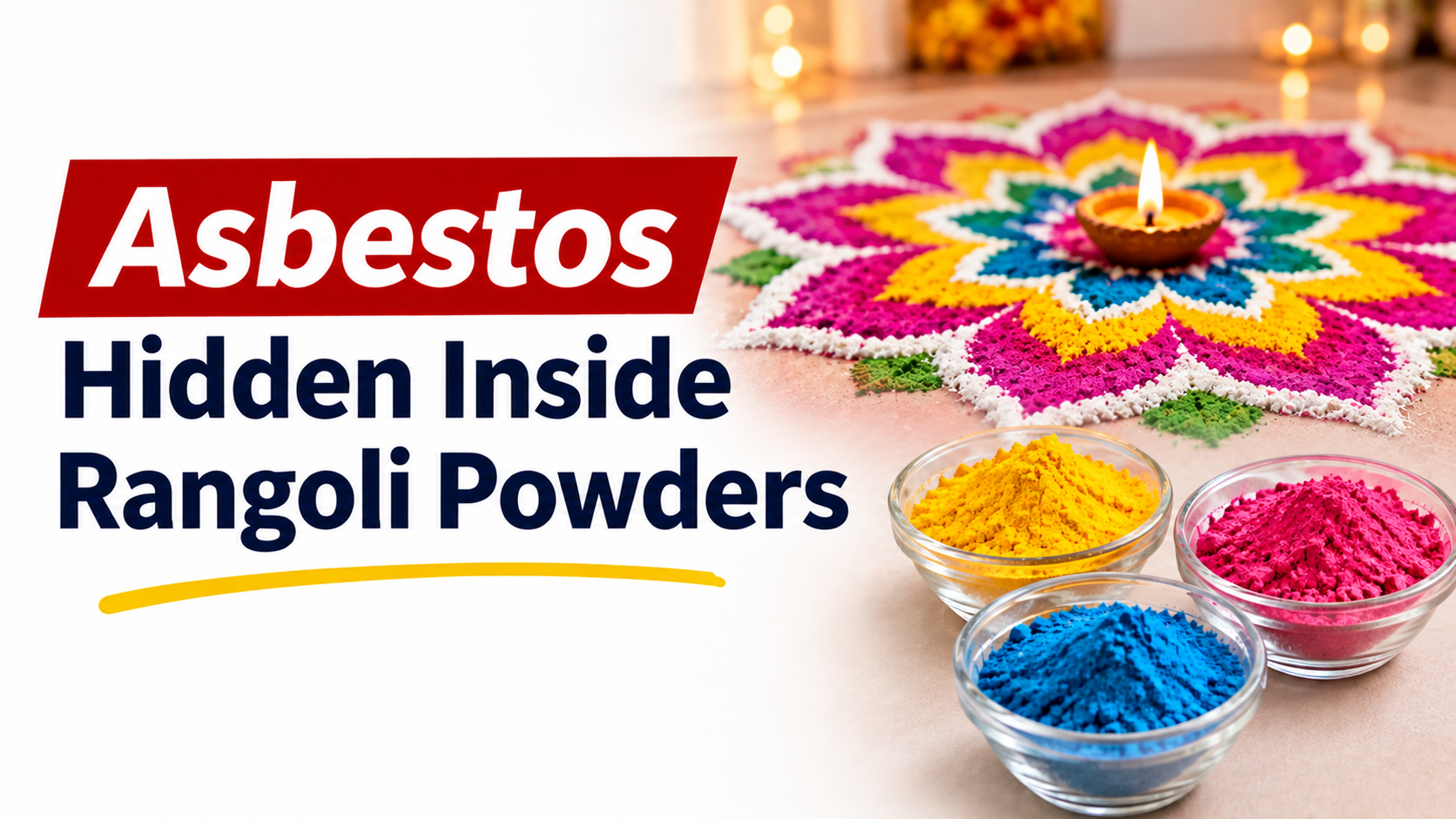
New Zealand has recalled specific rangoli products after asbestos was detected in samples. These notices do not establish whether affected products are available in India.
Table of Contents
Source-based news summary
Originally dated 10 November 2026. Editorial revision: 11 November 2026.
This article summarises published notices from New Zealand authorities, with background from the World Health Organization and Auckland University of Technology. Alfred Lab has not independently tested the products or conducted original reporting on these recalls. Source links are provided below.
Specific rangoli powder products sold in New Zealand have been recalled after asbestos was found in tested samples, according to New Zealand government notices. The notices identify affected products in that market; they do not establish contamination in products sold in India.
What happened
New Zealand’s Ministry of Education highlighted the recalls in its 3 September 2026 Early Learning Bulletin. It reported asbestos findings in samples and directed holders of affected products to stop use, secure the products and follow safe disposal advice. Product-specific notices are published by the Ministry of Business, Innovation and Employment (MBIE) through Product Safety New Zealand.
The official recall list includes Rangoli Powder packs of six and ten sold at Big Bazaar, Rangoli Colour sold at DH Supermarkets, Rangoli decorative powder (Ascension sand) sold online at Silkrute, Rangoli Colour Assorted 10 packs, and Pavitrom Rangoli Powder Pack and Rangoli Colour 200g products. Check the official recall notices for affected product details, retailers and instructions.
In a separate announcement dated 23 October 2026, MBIE set out mandatory asbestos testing for certain consumer sand products, including specified toys and decorative, art and craft products containing accessible sand. The requirement takes effect on 1 February 2027; it is not yet in force as of this revision.
Why it matters
The World Health Organization (WHO) identifies every form of asbestos as a human carcinogen and links exposure to cancer and chronic respiratory disease. These illnesses can take many years to develop. This establishes the hazard; it does not determine an individual consumer’s exposure or health outcome.
What it means for families in India
The relevance to Indian consumers is precautionary. The cited New Zealand notices do not establish whether affected products are available in India, and this article reports no Indian recall or India-specific testing result. The findings concern identified products and samples, rather than all rangoli powders. A “natural” label or a seller’s reputation alone does not demonstrate the absence of asbestos.
Advice from the sources
- Check the official recall notices against the packaging, seller and product identifiers. Follow the instructions for the affected product.
- In its 8 October 2026 article, Auckland University of Technology relayed researcher advice to request negative asbestos test results before buying sand products. It also suggested homemade rice-based colours, petals and leaves as alternatives.
- For recalled or suspected products, stop use, keep sealed containers away from children and avoid disturbing loose material. New Zealand guidance advises against sweeping or vacuuming affected sand and putting it in ordinary household rubbish. See the council disposal guidance and the relevant recall notice.
- Schools and workplaces should use guidance for their setting, including the Ministry of Education’s instructions for New Zealand educational facilities. Readers in India should seek local authority or qualified asbestos professional advice on containment, cleanup and disposal; New Zealand disposal arrangements do not establish local requirements.
Scope: This summary provides general product-safety information. It does not assess a specific product or replace advice from a healthcare professional about personal exposure concerns.
Editorial note: This revision clarifies the New Zealand scope, the future testing start date and the attribution of safety advice. Recall lists may change; consult the original notices for current product details and instructions.
References and original source material
- New Zealand Ministry of Education, Early Learning Bulletin, Issue 164, 3 September 2026 – https://www.education.govt.nz/bulletins/early-learning/03-09-26
- New Zealand Ministry of Business, Innovation and Employment (MBIE), Mandatory asbestos testing for some consumer sand products, 23 October 2026 – Original announcement
- World Health Organization, Asbestos fact sheet, 11 August 2026 – Original fact sheet
- Product Safety New Zealand, Recalled sand products – Official recall list
- Auckland University of Technology, Asbestos warning for rangoli powder, 8 October 2026 – Researcher advice and alternatives
- New Zealand Ministry of Education, Asbestos in coloured sand – Guidance for schools and early learning services
- Matamata-Piako District Council, Rainbow sand disposal – Household containment and disposal advice for recalled sand in New Zealand